
Note: This was originally published on Forbes Technology Council on December 2, 2025.
—
AI is everywhere. This reality is changing cybersecurity in ways the industry still hasn’t fully grasped. AI dissolves the boundaries that cybersecurity was designed to defend. Everything is everywhere, all the time.
For years, security operated within defined perimeters. Endpoints were managed through user authentication and device controls, networks moved predictable traffic through inspected paths and applications ran in fixed environments with known dependencies. Vendor ecosystems were built around protecting those discrete layers.
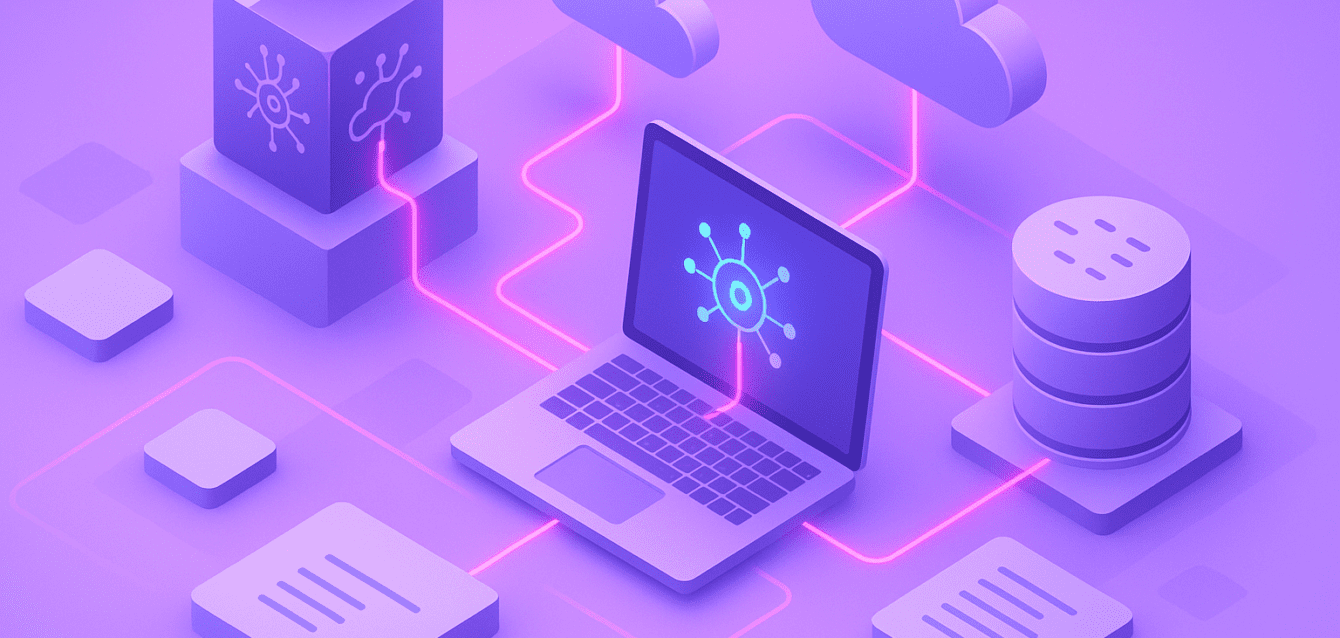
AI removes the boundaries that once kept those layers distinct. A single interaction can now cross every layer: A coding assistant on a laptop can call external models, query internal data and generate code that moves into production.
The Problem Nobody Wants To Admit
Customers are being gaslit by vendors claiming they’ve got AI security covered. Countless security and IT leaders tell me they can identify that someone accessed OpenAI, but they cannot determine whether a user made that call or an agent acting on behalf of the user. They cannot distinguish between a trusted binary and something downloaded from GitHub. They cannot determine whether that agent should have been trusted with those credentials.
This attribution gap reveals how completely the old model has broken down. Your endpoint was yours. Now it’s yours and your agents. You need to understand who’s doing what, where they’re doing it and how it all connects.
The scale of this challenge is staggering. Employees use ChatGPT and Claude through web browsers, install coding assistants as editor plugins, run desktop AI applications and interact with AI features embedded in their SaaS tools. Each connection creates potential data flows that bypass traditional security controls. Organizations face massive AI sprawl across every form factor without visibility or governance mechanisms designed for this reality.
The End Of Security Silos
For the first time in cybersecurity history, endpoint and network security can no longer operate in isolation. The old division made sense when each domain behaved independently: Endpoints managed local activity, networks controlled traffic and data protection tools handled content in motion. AI collapses these boundaries.
A single AI query can now traverse every layer, such as originating on a laptop, passing through corporate networks, calling cloud models, accessing internal databases and returning synthesized data to other systems. Each security tool sees a fragment of this interaction, but none can reconstruct the full context. What used to be specialization has become fragmentation.
Traditional products still excel within their narrow lanes, but none can interpret what happens inside AI interactions. A DLP tool can detect a file transfer but not a natural language prompt containing the same sensitive data. Endpoint detection can flag a new process, but cannot judge whether an agent’s request was authorized. Network monitoring can trace destinations, but not intent or policy alignment.
These blind spots expose a deeper architectural flaw. AI dissolves the boundaries of the old vendor ecosystem, forcing convergence across domains that were never designed to interoperate.
The Speed Problem
Previous technology shifts gave security teams time to adapt. Cloud adoption followed predictable enterprise cycles, mobile device management evolved over years and SaaS security matured alongside the tools it protected.
AI moves at compressed speed. Employees use AI-enhanced versions of familiar products like Microsoft Office, Slack and development environments, with updates that introduce new attack paths faster than policies can be written.
AI often enters an environment before security teams realize it. Marketing discovers new capabilities in content platforms, developers find coding assistants in their editors and finance encounters analysis tools in their spreadsheets. Each addition bypasses procurement and governance.
Organizations cannot wait for the ecosystem to stabilize before implementing governance. Unlike earlier transformations shaped by slow industry coordination, AI risks emerge faster than collective defenses can form.
The Architecture Challenge
Security leaders must accept that the old boundaries no longer provide meaningful structure for defense. The endpoint security vendor cannot solve AI risks without network context. The network security company cannot address AI threats without understanding endpoint behavior. The data protection tool cannot secure AI interactions without comprehending model behaviors and agent activities.
This convergence requirement creates pressure throughout the vendor ecosystem. Companies that built their businesses around domain expertise now face threats that span all domains simultaneously. The market response has been predictable: Established vendors add AI-related features to existing products and market these additions as comprehensive solutions.
But retrofitting legacy architectures to handle AI risks misses the essential point. AI introduces dynamic, self-propagating behaviors that demand runtime inspection and enforcement across data, model and agent layers, supported by operational governance to ensure those controls remain consistent as systems evolve.
What This Means For Security Leaders
The transformation demands new approaches to identity, attribution and control that account for both human users and autonomous systems operating with delegated authority. Security strategies built around controlling access to defined resources become insufficient when AI agents can autonomously access, process and act on information across multiple domains simultaneously.
Organizations that recognize this shift will build security architectures suited for an AI-native future. Those that attempt to retrofit existing approaches to handle AI risks will find themselves perpetually behind threats that evolve faster than traditional security can adapt.
Forward-looking organizations are already building these capabilities. Runtime inspection and enforcement provides real-time policy control as AI systems act, while operational governance establishes the frameworks for oversight, auditability and accountability that enterprise security now requires. Together, they form the foundation of AI-native defense.
The old cybersecurity model assumed we could map attack surfaces to discrete, controllable domains. AI makes this assumption obsolete by creating attack surfaces that exist everywhere simultaneously. The sooner security leaders acknowledge this reality, the sooner they can begin building the integrated defenses their organizations need.
This represents the most significant shift in cybersecurity since the internet’s emergence. The question isn’t whether AI will transform how we think about security, because it already has. The question is whether security leaders will adapt quickly enough to stay ahead of risks that transcend every boundary their current defenses were built to protect.